
Call us now
08071630218

 Send Inquiry
Industrial Motion Controller
Industrial Motion Controller Specification
- Application
- CNC Machines, Robotics, Packaging, Industrial Automation
- Sensor Type
- Encoder, Limit Switch Compatible
- Connectivity Type
- Ethernet, RS232, RS485, USB
- Cable Length
- 2 Meters (Standard)
- Load Capacity
- Up to 10A per axis
- Mounting Type
- Panel/DIN Rail Mount
- Control Type
- Digital/Computerized
- Weight
- 2.8 kg
- Frequency
- 50/60 Hz
- Phase
- Single/Three Phase Option
- Automation Grade
- Automatic
- Drive Type
- Servo/Stepper Supported
- Remote Control
- Yes
- Power
- 24V DC
- Temperature
- 0C to 50C (Operating)
- Memory
- 128MB Flash, 256MB RAM
- Cooling System
- Integrated Fan
- Alarm/Error Display
- LED Indicator & LCD Message
- Supported Motors
- AC Servo, DC Servo, Stepper
- Color
- Grey/Black
- Number of Controlled Axes
- 4 (expandable up to 6)
- Supported Communication Protocols
- Modbus TCP/IP, CANopen
- Power Consumption
- Max 65W
- Digital Inputs/Outputs
- 8/8 (Configurable)
- Firmware Upgrade
- USB/Ethernet
About Industrial Motion Controller
Multi-axis Motion controller
Can control upto more than 6 axis simultaneously
PLC DVP Series Programmable Logic controllers
Pulse Frequency Ranging from 10 Khz to 200 Khz
Absolute Positioning , Incremental Positioning via Direct commands
16 Digital Inputs , 12 Digital Outputs
4 Encoder Quadrature Inputs acceptable upto 500 Khz
16 External Interrupts
Controller Designed to Control
1) Servo motors ( 0.63 Nm to 98 Nm Torque , 3000 rpm )
2) Stepper motors ( 10 Kgcm to 400 Kgcm torque , Upto 500 rpm )
3) Brushless DC Servo motors ( 0.63 Nm to 2.88 Nm Torque , 3000 rpm )
4) AC motors , with Drives VFDs
5) Total turnkey Project Solutions
Programming , Installation , Commissioning , Wiring , Documentation Circuit Diagram , Panel Building Design
Enhanced Multi-Axis Control
This motion controller supports four axes by default, with expansion up to six, providing versatility for complex applications. It supports a substantial load capacity of up to 10A per axis and features flexible control via servo or stepper motors. Optimal for robotics, CNC machines, and packaging lines, it delivers smooth, precise automation in highly dynamic industrial settings.
Comprehensive Connectivity and Configuration
Compatible with Modbus TCP/IP, CANopen, Ethernet, RS232, RS485, and USB, the controller guarantees seamless integration with current and legacy automation platforms. Eight configurable digital inputs and outputs allow customized system responses, while its support for encoder and limit switches enables precise monitoring and safety.
Intuitive Operation and Reliable Performance
LED indicators and an LCD message display provide immediate system feedback and fault alerts for efficient troubleshooting. The integrated cooling fan ensures consistent performance in temperatures ranging from 0C to 50C. Firmware upgrades via USB or Ethernet offer ongoing enhancements, while the panel/DIN rail mount design streamlines installation in diverse industrial environments.
FAQs of Industrial Motion Controller:
Q: How do I expand the number of controlled axes from 4 to 6 on this motion controller?
A: Expanding from 4 to 6 axes requires optional expansion modules, which can be easily integrated into the system. Detailed setup instructions are provided in the user manual, and modules can be configured through the controllers software interface for tailored motion control needs.Q: What is the process for firmware upgrades on the motion controller?
A: Firmware can be upgraded by connecting a USB drive with the update file or through Ethernet using dedicated upgrade tools or software. This ensures the controller benefits from the latest features and improved stability without major downtime.Q: Where can this motion controller be mounted within my facility?
A: The controller is designed for flexible mounting, either on a standard industrial panel or a DIN rail. This adaptability simplifies installation in diverse automation enclosures or control cabinets, accommodating space constraints or system layouts.Q: What types of motors and industrial applications does the motion controller support?
A: This controller drives a wide range of motors, including AC servo, DC servo, and stepper types. It is ideally suited for CNC machines, robotic systems, automated packaging machines, and general industrial automation where precise, synchronized motion is essential.Q: When should the integrated cooling fan be used and how does it benefit the system?
A: The integrated fan operates automatically to regulate internal temperatures, especially during continuous high-load operation or in warmer environments. This enhances longevity and maintains optimal performance during extended industrial use.Q: How does the motion controller facilitate remote operation and system integration?
A: With Ethernet, RS232, RS485, and USB connectivity, alongside Modbus TCP/IP and CANopen protocols, operators can remotely monitor and control the system, integrate it into existing networked environments, and achieve centralized automation management.Q: What safety features are included, and how are alarms or errors displayed?
A: The controller employs LED indicators and an informative LCD message display to notify users of operational status or errors. It also supports connections to limit switches and encoders for movement safety, making troubleshooting straightforward and quick.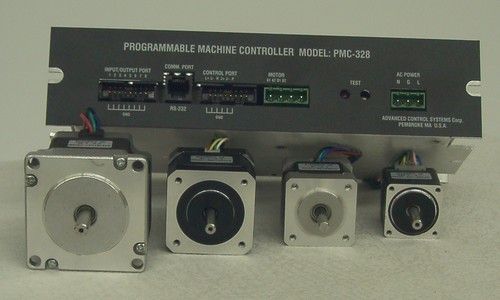
Tell us about your requirement

Price:
Quantity
Select Unit
- 50
- 100
- 200
- 250
- 500
- 1000+
Additional detail
Mobile number
Email

More Products in Motion Controllers Category
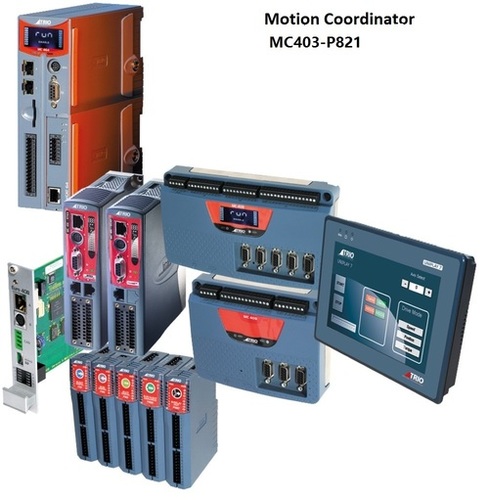
MC403-P821 TRIO
Features : Highspeed processing, Multiple I/O, Compact design
Application : Industrial Automation / Process Control
Mounting Type : DIN Rail
Speed Range : Programmable
Control Type : Digital
Temperature : 10C to +50C
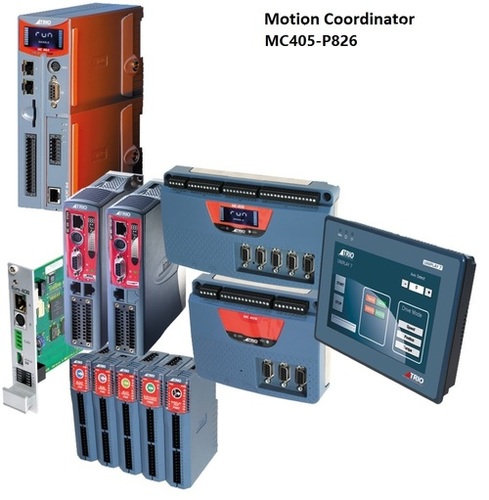
TRIO MC405-P826
Features : MultiFunction Operation, LED Indication, Overload Protection
Application : Motor Control, Automation Panel, Industrial Use
Mounting Type : Wall Mount
Speed Range : Variable
Control Type : Microcontroller Based
Temperature : 10C to +60C
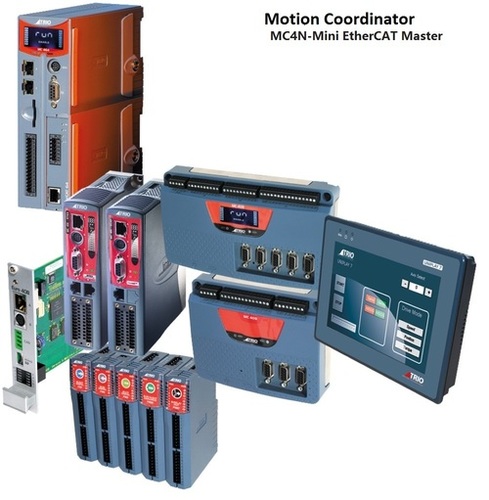
MC4N-TRIO Mini EtherCAT Master
Features : Compact footprint, Highspeed EtherCAT communication, Easy integration
Application : MultiAxis Motion Control, EtherCAT Networks, Robotics, OEM Machine Builders
Mounting Type : DIN Rail Mountable
Speed Range : Controller: Realtime, motor/axis dependent
Control Type : EtherCAT Master, MultiAxis Controller
Temperature : 0C to +40C (operating); 20C to +70C (storage)
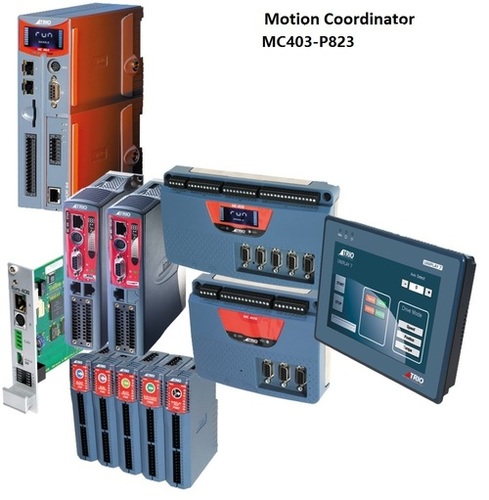
TRIO MC403-P823
Features : Compact size, energy saving, overload protection
Application : Motor control, industrial automation
Mounting Type : Panel mount
Speed Range : 0.5 400 Hz
Control Type : Microprocessor based
Temperature : 10C to 50C

TECHNOVISION CONTROL SYSTEMS PVT. LTD.
GST : 27AADCT3013C1ZX
GST : 27AADCT3013C1ZX
202, Ambience Park, DanaBunder, Behind Lalji Mulji, Sector-19, Vashi, Navi Mumbai - 400703, Maharashtra, India
Phone :08071630218
Ms. Prachi
(Sales Coordination)
Mobile :08071630218
Mr. Sagar Pramod Sadavarte
(Director)
Mobile :08071630218
 Send Inquiry
- AC Servo motors
- AC Servo Drives
- PLC HMI Controllers
- Motion Controllers
- Programmable Logic Controllers
- CNC Controllers
- Control Panels
- Stepper motors
- Stepper Drives
- Panasonic GearHead
- Brushed DC Servo motors
- Brushed DC Servo Drives
- Brushless DC Driver for motor
- BLDC Servo motors
- PANASONIC Geared Motors
- Panasonic Sensors
- Integration Projects
- SCADA
- DC Thyristorised Drive
- Digital DC Drive
- Planetary gearbox
- Fatek PLC
- TCSPL
 Send Inquiry
 Send SMS
TECHNOVISION CONTROL SYSTEMS PVT. LTD.
All Rights Reserved.(Terms of Use)
Developed and Managed by Infocom Network Private Limited.
Developed and Managed by Infocom Network Private Limited.

